
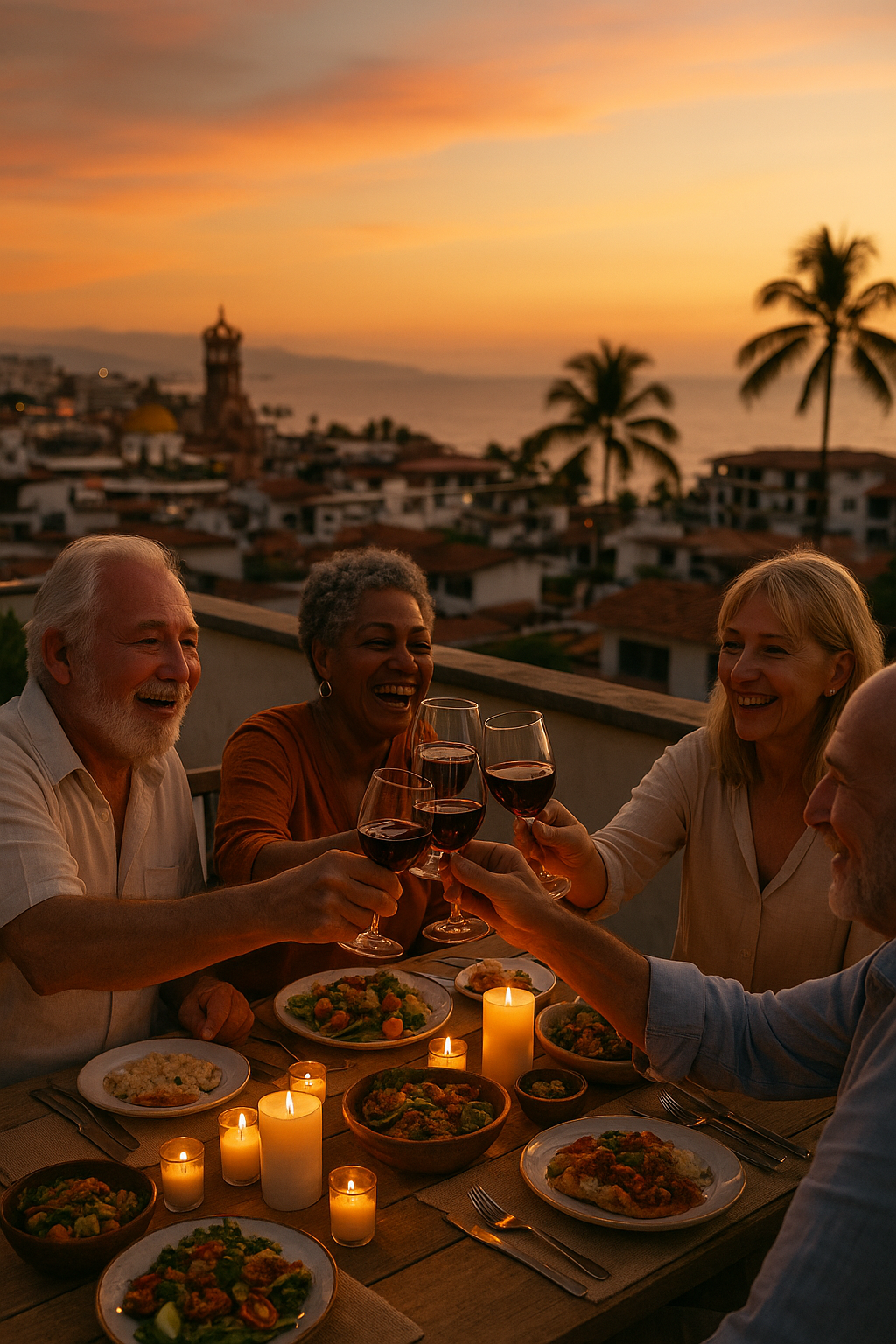
Puerto Vallarta is one of Mexico’s most popular retirement destinations—and for good reason.
But what’s it really like to live here long-term, not just vacation?
If you’re dreaming of retiring in paradise, here’s what you need to know before packing your bags.
Key Takeaways
-
Puerto Vallarta offers warm weather, ocean views, and a relaxed lifestyle perfect for retirees.
-
The cost of living is lower than in the U.S. or Canada, especially for healthcare and housing.
-
There’s a strong expat community with great social life and support.
-
Residency and healthcare options are accessible for most retirees.
The Climate and Lifestyle Are Exactly What You Think—In a Good Way
If you love sunshine, beaches, and a laid-back vibe, Puerto Vallarta delivers.
With average temps hovering in the 70s–80s °F (21–30 °C) year-round, it’s ideal for outdoor living. You’ll find people walking the Malecón, dining al fresco, or enjoying a cold cerveza at sunset—almost daily.
Rainy season (June–October) brings tropical showers, but they’re usually short and welcome the cooler evenings.
It’s Surprisingly Affordable—But It Depends on Your Lifestyle
Puerto Vallarta offers a lower cost of living, but that doesn’t mean it’s “cheap.”
-
A beachfront condo? Pricier, but still lower than Miami or L.A.
-
Local produce, taxis, and meals? Very affordable.
-
Private healthcare? High quality at a fraction of U.S. costs.
Many retirees comfortably live on $2,000–$3,000 USD/month, but your budget depends on location and lifestyle.
The Expat Community Is Massive and Welcoming
There’s a thriving expat and retiree community here.
Facebook groups, meetups, and local clubs make it easy to meet people. English is widely spoken in central and expat-heavy areas.
If you want connection, culture, and community, you’ll find it fast.
Is Healthcare Reliable in Puerto Vallarta?
Yes—and it’s one of the biggest perks.
Puerto Vallarta has excellent private hospitals, English-speaking doctors, and low wait times.
You can pay out of pocket, use travel insurance, or apply for IMSS (Mexican public health insurance) if you gain residency.
Many retirees say healthcare here is better and far more affordable than what they had back home.
Can You Get Residency Easily?
Mexico makes it relatively easy for retirees to gain temporary or permanent residency.
If you have proof of retirement income or savings, you can apply for a temporary visa and later upgrade to permanent status. It helps you:
-
Stay longer than 180 days
-
Open a bank account
-
Access local healthcare
Talk to an immigration expert or attorney to get it done right.
Downsides? Yep, There Are a Few
No place is perfect—even Puerto Vallarta.
Here’s what to expect:
-
Humidity and bugs in summer
-
Occasional language barriers
-
Infrastructure isn’t always up to U.S. standards
-
Tourist seasons can get crowded and noisy
But many retirees find these trade-offs worth it.
Final Thoughts
Retiring in Puerto Vallarta offers beauty, affordability, healthcare, and community.
But it’s not just a vacation—it’s a real place to live.
Spend time here first. Rent before you buy. Talk to other retirees.
Then decide if this beach town is your forever home.
FAQs
Is Puerto Vallarta safe for retirees?
Yes. It’s considered one of the safest cities in Mexico, especially in expat neighborhoods.
Can I buy property in Puerto Vallarta as a foreigner?
Yes. Through a bank trust (fideicomiso), foreigners can buy property in the restricted coastal zone.
Do I need to speak Spanish to retire in Puerto Vallarta?
Not necessarily. English is widely spoken, but learning some Spanish will definitely help.