
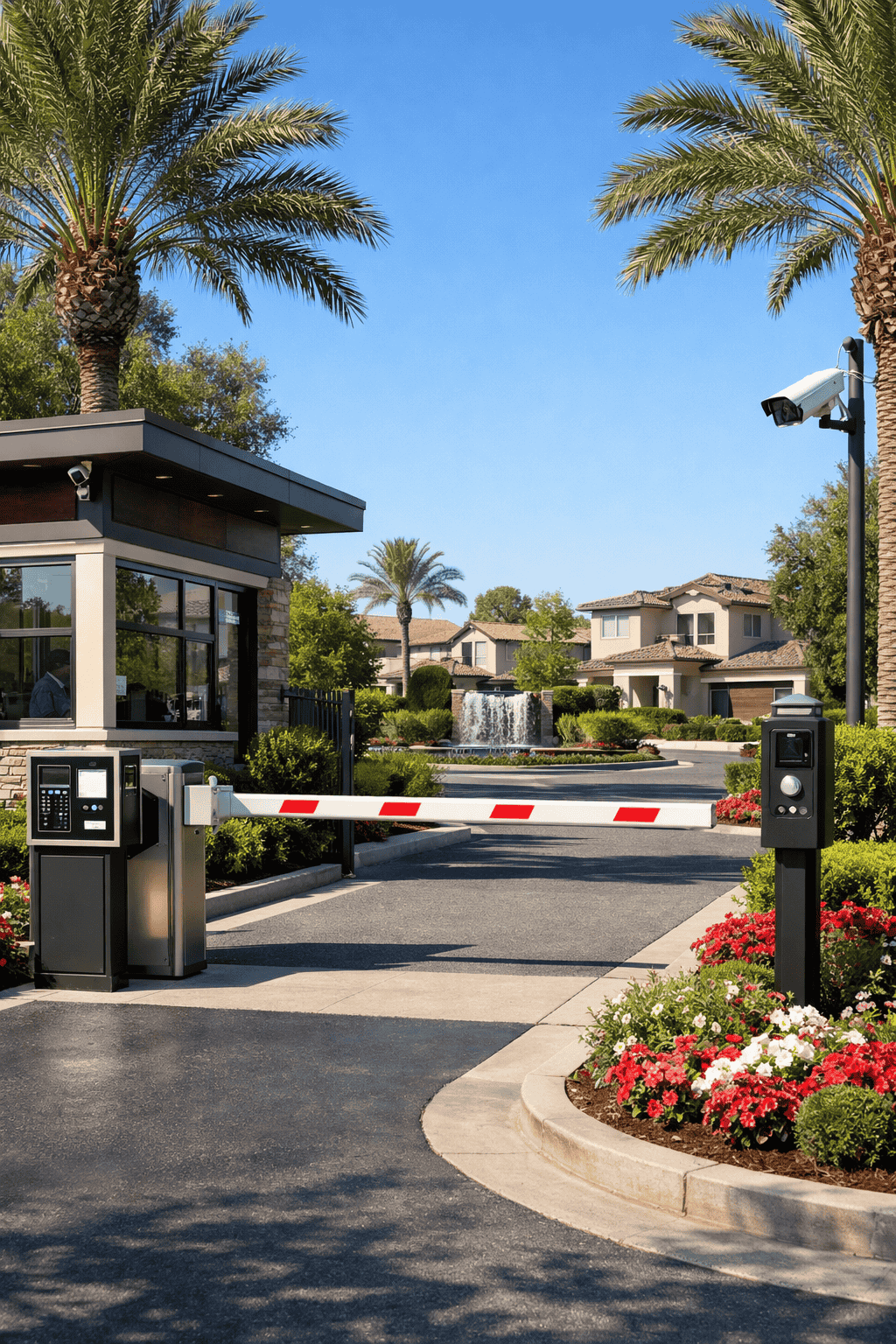
Private communities and planned developments are becoming a major part of modern housing.
They are designed not just for comfort and amenities, but also to improve residential security and provide residents with greater peace of mind.
In many cities, homeowners are increasingly choosing gated communities and master-planned developments because of their built-in safety features and controlled environments.
What Are Private Communities and Planned Developments?
A private community is a residential area with controlled access and shared amenities that are typically managed by a homeowners association (HOA) or property management group.
A planned development, often called a master-planned community, is a neighborhood that is carefully designed before construction begins. These developments usually include homes, roads, parks, schools, and commercial areas arranged within a single long-term plan.
Many of these communities include:
-
Gated entrances
-
Private roads
-
Security personnel or patrols
-
Surveillance cameras
-
Shared recreational facilities
Because these elements are built into the development from the start, security becomes part of the community’s overall design.
Controlled Access Improves Safety
One of the most noticeable security advantages is controlled entry points. Gated communities limit access to residents, guests, and authorized visitors.
Security measures often include:
-
Electronic key cards or gate codes
-
Security guards monitoring entry points
-
Visitor registration systems
This controlled access helps reduce unwanted traffic and lowers the risk of certain crimes compared with neighborhoods that have unrestricted entry.
Community Design Supports Security
Planned developments are often designed with security-oriented layouts. Urban planners and developers consider visibility, traffic flow, and public spaces when designing the neighborhood.
For example:
-
Streets may be designed to discourage high-speed traffic.
-
Homes may face common areas for better visibility.
-
Lighting is strategically placed in streets, sidewalks, and parking areas.
These design choices contribute to a concept known as “Crime Prevention Through Environmental Design” (CPTED), where the physical layout of a community helps discourage criminal activity.
Shared Security Resources
Private communities typically pool resources to support security features that individual homeowners might not afford on their own.
Examples include:
-
24/7 security patrols
-
Neighborhood surveillance systems
-
Emergency communication networks
-
Centralized security monitoring
Because the cost is shared among residents through HOA fees, communities can maintain consistent and professional security services.
Stronger Sense of Community
Security is not just about cameras and gates. It is also about social awareness and cooperation among neighbors.
Private communities often encourage interaction through shared spaces such as parks, clubhouses, and recreational facilities. This can lead to stronger relationships between residents.
When neighbors know each other, they are more likely to:
-
Notice suspicious activity
-
Report safety concerns
-
Look out for each other’s property
This type of informal monitoring can significantly enhance neighborhood safety.
Technology and Modern Security Features
Many newer planned developments integrate smart technology to improve safety.
Common technologies include:
-
Smart gate systems
-
License plate recognition cameras
-
Mobile apps for visitor access
-
Smart home integration with security systems
These tools allow residents and property managers to monitor activity and manage access more efficiently.
Balancing Security and Accessibility
While private communities offer enhanced security, they also raise questions about accessibility and exclusivity. Some critics argue that gated developments can contribute to social separation within cities.
However, when designed thoughtfully, planned communities can balance privacy, safety, and connection to surrounding neighborhoods.
The Future of Residential Security
As urban populations grow and security concerns evolve, planned developments and private communities are likely to play an even greater role in residential living.
By combining thoughtful design, modern technology, and active community participation, these developments can create neighborhoods that are not only comfortable but also safer for residents.
For homebuyers seeking peace of mind along with quality living environments, private communities continue to be an attractive option in today’s housing market.